
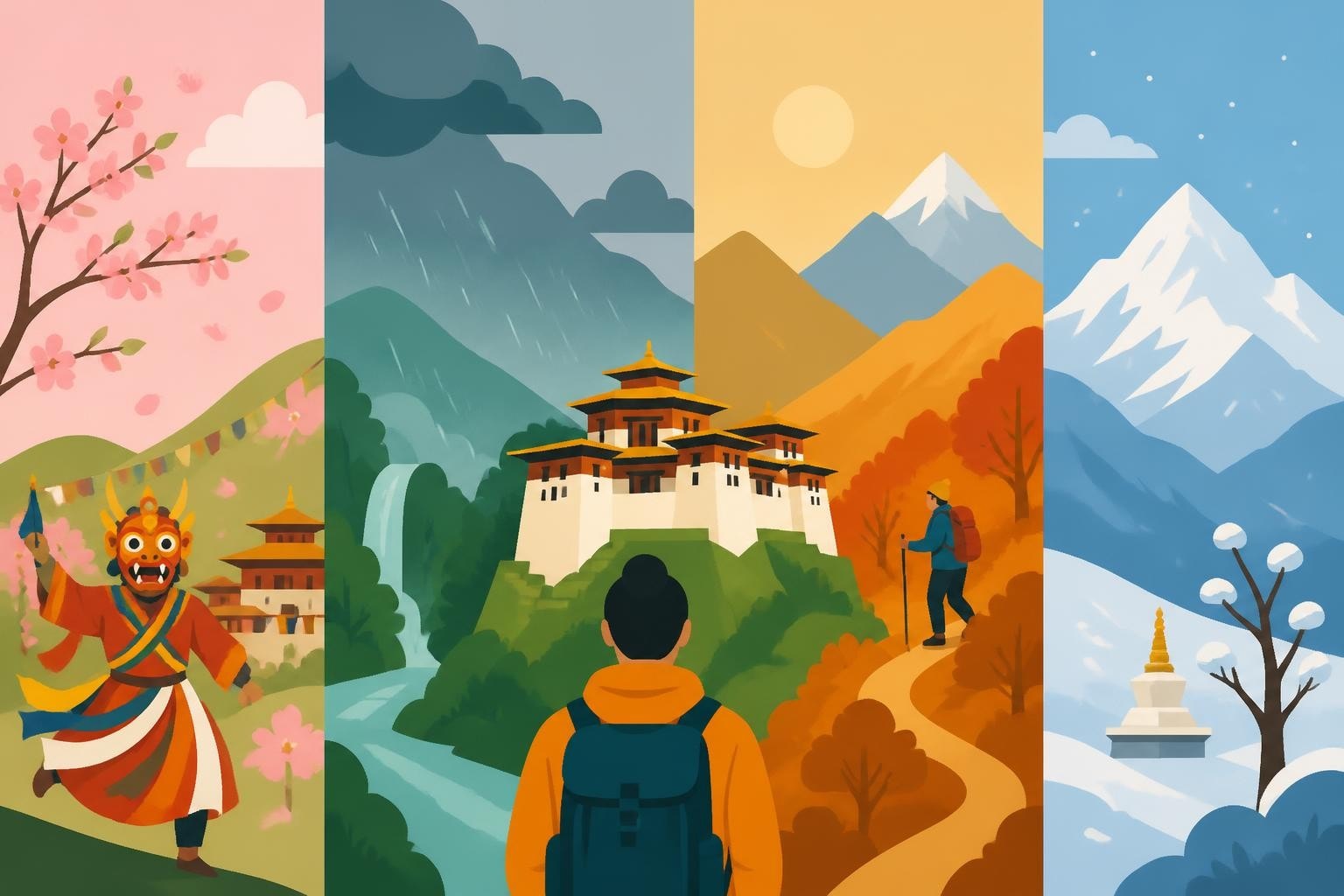
Choosing the best time to visit Bhutan requires understanding more than just weather patterns. This Himalayan kingdom experiences distinct seasonal shifts that dramatically influence festival schedules, trekking conditions, wildlife viewing opportunities, and overall travel experiences. Unlike many destinations where timing revolves solely around avoiding rain or crowds, Bhutan's seasonal calendar intertwines with cultural events, agricultural cycles, and spiritual observances that have shaped life in these mountains for centuries. Understanding these rhythms helps travelers align their journey with their specific interests, whether seeking vibrant festival experiences, pristine trekking conditions, or intimate cultural encounters.
Understanding Bhutan's Four Distinct Seasons
Bhutan's climate varies significantly by elevation and region, creating microclimates across the country. The western valleys experience different weather patterns than eastern Bhutan, while high-altitude regions maintain their own unique conditions.
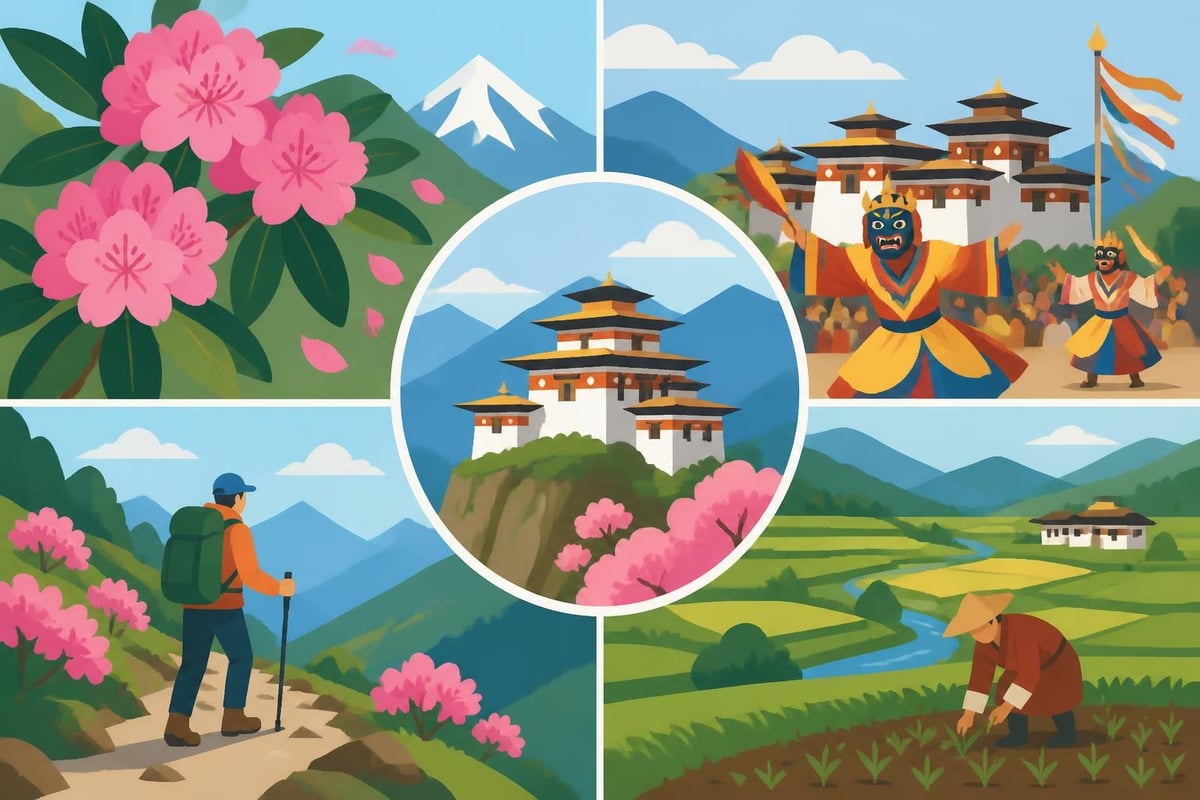
Spring arrives between March and May, bringing moderate temperatures and blooming rhododendrons that paint hillsides in vibrant colors. This season marks the agricultural awakening, with farmers preparing fields for planting across the valleys.
Spring Weather Patterns
March temperatures range from 50°F to 65°F in valleys like Paro and Punakha, though higher elevations remain cooler. April brings warmer conditions, with occasional afternoon showers that clear quickly. May transitions toward pre-monsoon warmth, with increasing humidity in lower regions.
The Atlas of Seasons data shows spring as one of Bhutan's most stable weather periods, particularly beneficial for travelers concerned about predictable conditions. Clear morning skies make this an excellent season for photography and mountain views.
Autumn: Peak Season for Cultural Immersion
September through November represents the best time to visit Bhutan for most travelers, combining optimal weather with the country's most significant festivals. Post-monsoon skies offer exceptional clarity, with daytime temperatures ranging from 60°F to 70°F in major valleys.
Festival Season Excellence
Autumn hosts Bhutan's premier cultural celebrations, including the Thimphu Tsechu and other masked dance festivals. These multi-day events showcase centuries-old traditions through elaborate costumes, sacred dances, and community gatherings that unite entire valleys.
According to Eurostat’s analysis of seasonality in tourism demand, autumn concentration of travel reflects global patterns where favorable weather and cultural events create natural peak periods. Bhutan experiences this intensely during October.
| Autumn Month | Temperature Range | Primary Festivals | Trekking Conditions |
|---|---|---|---|
| September | 55°F – 68°F | Wangdue Festival | Excellent, trails drying |
| October | 50°F – 65°F | Thimphu Tsechu, Prakhar | Outstanding visibility |
| November | 45°F – 60°F | Black-Necked Crane arrival | Clear, increasingly cool |
The crisp air and stable weather make autumn ideal for photography enthusiasts. Mountain views extend for miles, and the golden light filtering through clear skies creates exceptional conditions for capturing Bhutan's dramatic landscapes.
Why October Stands Out
October represents the single best time to visit Bhutan for travelers seeking balanced experiences. The month offers:
- Festival abundance across multiple valleys
- Perfect trekking temperatures in all elevation zones
- Maximum visibility for Himalayan mountain views
- Harvest season energy throughout agricultural communities
- Comfortable exploration of dzongs and monasteries
The 6 nights Western Bhutan amusement itinerary particularly shines during October, when travelers can witness the black-necked crane migration in Phobjikha Valley while experiencing multiple festivals and engaging with monks and scholars about Gross National Happiness philosophy under perfect weather conditions.
Winter: Solitude and Authenticity
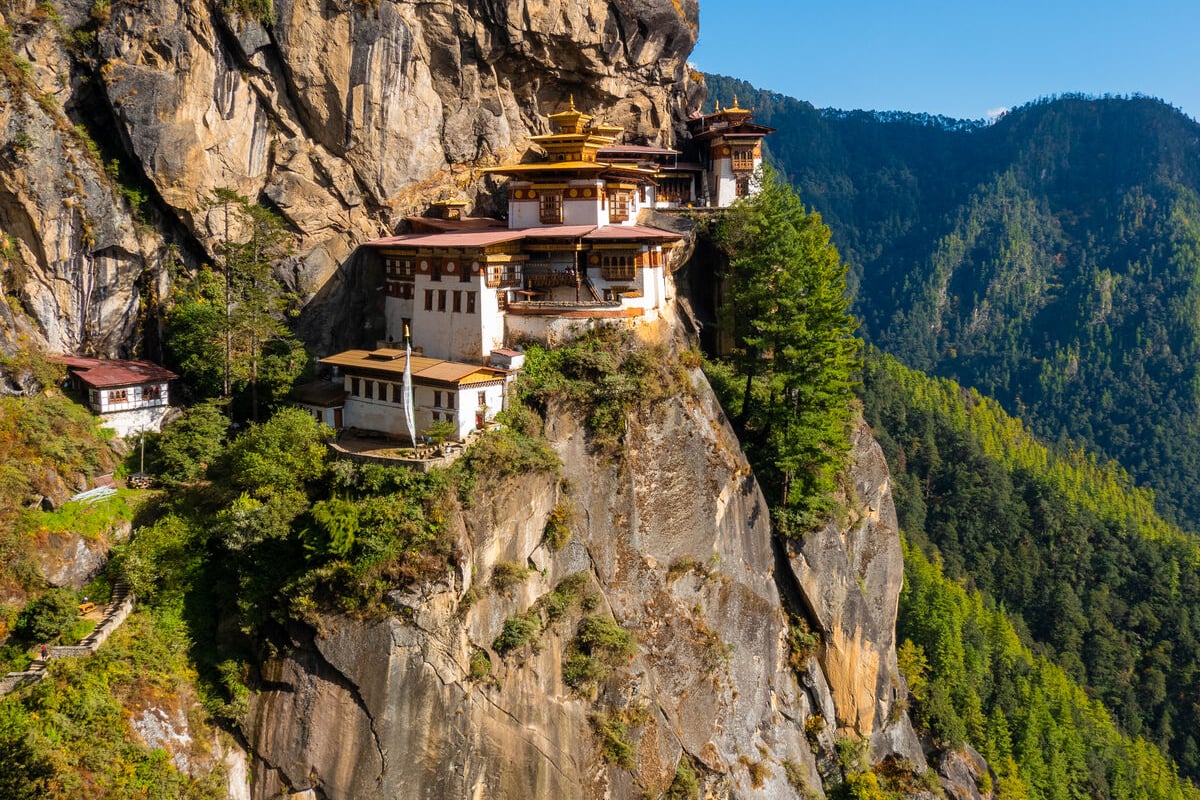
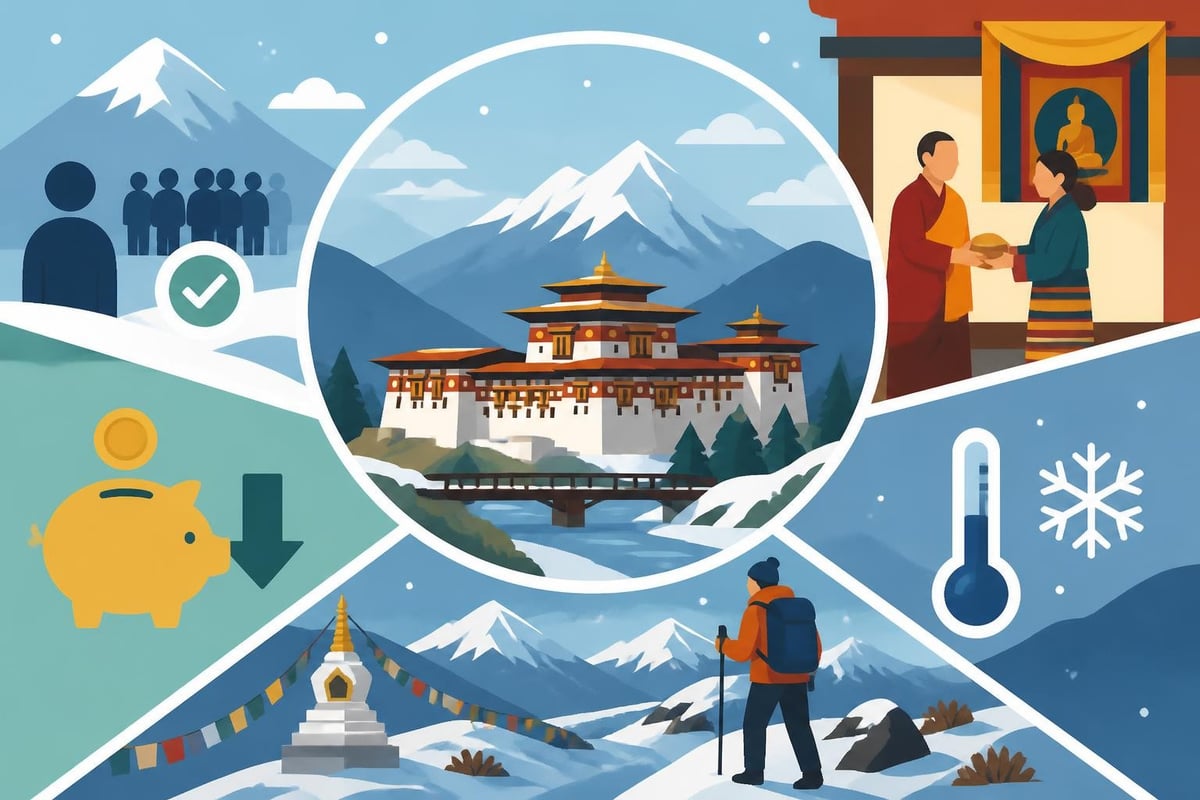
December through February transforms Bhutan into a quieter destination, offering unique advantages for specific traveler profiles. While temperatures drop significantly, particularly in northern regions, winter provides authentic cultural experiences without crowds.
Temperature and Accessibility Considerations
Valley temperatures range from 35°F to 55°F during winter days, dropping to 15°F to 30°F at night. Higher-elevation passes may close temporarily after heavy snowfall, though major valleys remain accessible year-round.
Winter advantages include:
- Significantly reduced visitor numbers
- Lower accommodation rates in some locations
- Intimate festival experiences without large crowds
- Crystal-clear mountain visibility on dry days
- Authentic interaction with communities during slower agricultural periods
The Punakha Winter Trek specifically capitalizes on this season's advantages, offering comfortable trekking at lower elevations where temperatures remain pleasant. Winter festivals like Punakha Drubchen and Tsechu attract primarily local participation, providing deeper cultural immersion.
Strategic Winter Travel Planning
Winter works exceptionally well for travelers prioritizing cultural depth over outdoor adventure. The season suits those interested in:
- Extended monastery visits with unhurried exploration
- Learning traditional crafts from artisans with available time
- Photography emphasizing architecture and cultural details
- Philosophical discussions about Gross National Happiness
- Cost-conscious travel taking advantage of shoulder-season benefits
Hotel booking trends show winter represents genuine low season in Bhutan, creating opportunities for travelers seeking value and authenticity over conventional peak-season experiences.
Monsoon Season Realities and Opportunities
June through August brings monsoon weather, creating the most challenging conditions but also revealing Bhutan's lushest landscapes. Daily rainfall transforms valleys into emerald sanctuaries, with waterfalls cascading down every hillside.
Weather Patterns and Practical Implications
Monsoon doesn't mean constant rain throughout Bhutan. Eastern regions receive heavier precipitation, while rain shadow valleys like Bumthang experience lighter, shorter showers. Typical patterns include:
- Morning clarity followed by afternoon storms
- Multi-day rain events interspersed with sunny periods
- Road conditions requiring flexibility
- Lush vegetation obscuring some mountain views
- Active wildlife benefiting from abundant food sources
The CDC’s travel health advisories note monsoon season's elevated risk for waterborne illnesses in some regions, emphasizing the importance of food and water precautions during wetter months.
Who Should Consider Monsoon Travel
Monsoon represents the best time to visit Bhutan for specific interests:
Botanists and nature photographers find unparalleled subject matter, with wildflowers blooming prolifically and forests at peak vitality. The natural vegetation diversity becomes most apparent during these months.
Budget-conscious travelers benefit from the lowest rates of the year, with some accommodations offering significant discounts. Research on airfare pricing seasonality shows post-pandemic patterns maintain summer as a value period for Asian destinations.
Flexible adventurers who embrace unpredictability and adjust plans based on daily weather appreciate monsoon's dramatic beauty and uncrowded trails.
Matching Travel Interests to Optimal Timing
Different travel motivations align with specific seasons, making the best time to visit Bhutan highly personal.
Trekking Priority Calendar
| Trek Difficulty | Best Months | Alternative Months | Avoid |
|---|---|---|---|
| High altitude (Jomolhari, Snowman) | September – November | April – May | December – February, June – August |
| Moderate elevation | March – May, September – November | December, February | July – August |
| Low elevation winter treks | November – March | April, September | June – August |
The Druk Path Trek exemplifies routes best tackled during spring or autumn, when high passes remain snow-free and visibility maximizes the experience. Conversely, winter treks designed for lower elevations become the best time to visit Bhutan for trekkers traveling December through February.
Festival-Focused Planning
Bhutan's festival calendar dictates timing for culture-focused travelers. Major events distribute across seasons:
Spring festivals include Paro Tsechu in March or April (dates vary by lunar calendar), drawing thousands to witness the dramatic unfurling of the giant thangka.
Autumn concentrates premier festivals, with Thimphu Tsechu, Wangdue celebrations, and regional events creating multiple opportunities within weeks.
Winter showcases unique ceremonies like Punakha Drubchen, a reenactment of 17th-century battles featuring warriors in traditional armor.
Wildlife and Nature Observation
- Black-necked cranes arrive in Phobjikha Valley from November through February, making winter the best time to visit Bhutan for ornithologists
- Spring flowering (March-May) attracts botanists and garden enthusiasts
- Monsoon biodiversity (June-August) reveals amphibians, insects, and forest ecology
- Autumn migration (September-October) brings diverse bird species through valleys
Regional Variations in Optimal Timing
Bhutan's geography creates distinct microclimates that influence when specific regions shine.
Western Bhutan Considerations
Western Bhutan, including Paro, Thimphu, Punakha, and Phobjikha, experiences the country's most moderate climate. This region remains accessible year-round, with each season offering distinct advantages.
Punakha Valley's lower elevation creates a subtropical microclimate, making it pleasant even during winter months when temperatures in Paro and Thimphu drop significantly. This makes multi-valley itineraries strategic during shoulder seasons.
Central and Eastern Regions
Central Bhutan districts like Bumthang sit at higher elevations, experiencing colder winters but benefiting from rain shadow effects during monsoon. Eastern regions receive heavier monsoon precipitation but offer authentic experiences year-round for adventurous travelers.
The best time to visit Bhutan's eastern valleys runs from October through April, when roads remain most reliable and weather conditions favor exploration of remote communities.
Practical Planning Considerations
Beyond weather and festivals, several practical factors influence optimal timing.
Booking Windows and Availability
Peak season (September-November and March-May) requires booking specialized services well in advance. Tour operators focusing on personalized experiences often limit group sizes, making early planning essential for securing preferred dates.
Understanding Bhutan’s tourism policy helps travelers appreciate how sustainable tourism principles influence capacity and why advance planning matters regardless of season.
Health and Safety Timing
Seasonal health considerations include:
- Altitude acclimatization requirements remain constant but feel more challenging during temperature extremes
- Air quality peaks during dry seasons (October-November, March-April)
- Waterborne illness risk increases during monsoon months
- Cold weather preparation becomes critical for winter travel above 8,000 feet
Photography and Documentation Goals
Light quality varies significantly by season, influencing the best time to visit Bhutan for photography enthusiasts:
- Autumn offers maximum clarity for landscape and mountain photography
- Spring provides dramatic weather with dynamic cloud formations
- Winter delivers golden hour magic with low-angle light
- Monsoon creates mood through mist, rain, and verdant foregrounds
Balancing Personal Preferences with Seasonal Realities
Ultimately, determining the best time to visit Bhutan requires honest assessment of personal priorities and tolerance for variability.
Weather-sensitive travelers should prioritize September through November or March through May, accepting higher costs and more fellow visitors as trade-offs for reliability.
Budget-focused adventurers find exceptional value during December through February or June through August, accepting weather challenges for significant savings and authentic experiences.
Culture-immersion seekers must align travel with specific festival dates, which shift annually based on the lunar calendar. Checking festival schedules for target years becomes the starting point rather than selecting months first.
Outdoor enthusiasts planning challenging treks have narrow windows (typically April-May and September-October for high-altitude routes), making flexibility difficult.
Creating Hybrid Strategies
Many experienced travelers combine seasonal advantages by:
- Extending stays to span shoulder seasons and capture both spring and summer or autumn and winter elements
- Focusing regionally to match localized climate advantages
- Prioritizing specific experiences rather than comprehensive coverage
- Building flexibility into itineraries to accommodate weather variations
The personalized approach offered by specialist operators allows crafting itineraries that optimize timing for individual priorities rather than following generic seasonal recommendations.
Monthly Breakdown for Decision-Making
March: Warming weather, spring festivals beginning, rhododendrons starting to bloom, increasing daylight. Excellent for eastern valleys and moderate trekking.
April: Peak spring conditions, Paro Tsechu typically occurs, optimal for photography, comfortable temperatures throughout most regions.
May: Pre-monsoon warmth, fewer crowds than autumn, good for high-altitude trekking before monsoon, occasional afternoon storms.
June-August: Monsoon season, lush landscapes, lowest prices, flexible schedules needed, best for budget travelers and nature enthusiasts.
September: Post-monsoon clearing, autumn festivals beginning, trekking season opening, pleasant temperatures, increasing visitor numbers.
October: Peak season, optimal weather, major festivals, maximum visibility, highest prices, advance booking essential.
November: Autumn excellence continuing, black-necked cranes arriving, cooling temperatures, fewer crowds than October, still excellent conditions.
December-February: Winter quiet, authentic cultural access, cold temperatures, clear skies, specialized winter activities, significant savings.
Maximizing Your Chosen Season
Regardless of when you determine is the best time to visit Bhutan for your specific interests, strategic planning maximizes that season's advantages.
Pre-Trip Preparation by Season
Spring and autumn travelers should book accommodations and guides months ahead while maintaining clothing flexibility for temperature swings between valleys and elevations.
Winter visitors must pack comprehensive cold-weather gear while researching which high-elevation sites may have limited access. Focusing itineraries on lower valleys and cultural sites rather than high-altitude adventures aligns expectations with reality.
Monsoon travelers benefit from waterproof gear, flexible schedules allowing weather-based route adjustments, and appreciation for dramatic scenery even without constant mountain visibility.
Real-Time Adjustment Strategies
Working with experienced guides familiar with regional microclimates allows real-time itinerary optimization based on current conditions. A rainy forecast in one valley might suggest shifting to a rain-shadow region, while unexpected clear weather could enable spontaneous high-altitude excursions.
This flexibility represents one advantage of personalized tour operations focusing on single-group attention rather than fixed departures following rigid schedules regardless of conditions.
Selecting the best time to visit Bhutan involves weighing weather reliability, cultural events, outdoor activities, and personal priorities to find your ideal travel window. Whether you're drawn to autumn's festival energy, spring's blooming valleys, winter's authentic solitude, or monsoon's dramatic landscapes, each season offers distinct rewards for those who understand what to expect.
Bhutan Personal Tours and Treks specializes in crafting personalized itineraries that align with your seasonal preferences and travel goals, ensuring you experience Bhutan at the perfect time for your interests. With over two decades of guiding experience and a commitment to taking just one group at a time, Tsering Penjor creates journeys that capture the essence of Bhutan's seasons while prioritizing your comfort, safety, and authentic cultural engagement.